What Do Social Media Companies Fear? Time Management.

I recently came across an interesting academic article in the journal Frontiers in Psychology. It was titled, ​“The relationships between social media use, time management, and decision-making styles.”​

The paper’s author surveyed 612 university students and young adults, asking them, among other things, about their digital habits and levels of personal organization. Using a linear regression analysis, she uncovered the following:

“Social media use was negatively and significantly associated with overall time management and all its subscales.”

Here’s the standard interpretation of this result: Social media is distracting, and if you’re distracted, it becomes harder to maintain control over your schedule. So, the more you use social media, the worse you become at time management.

But I’ve become interested in the reverse form of this argument: the better your planning system, the less time you’ll spend on engagement-based applications like social media.

Read more

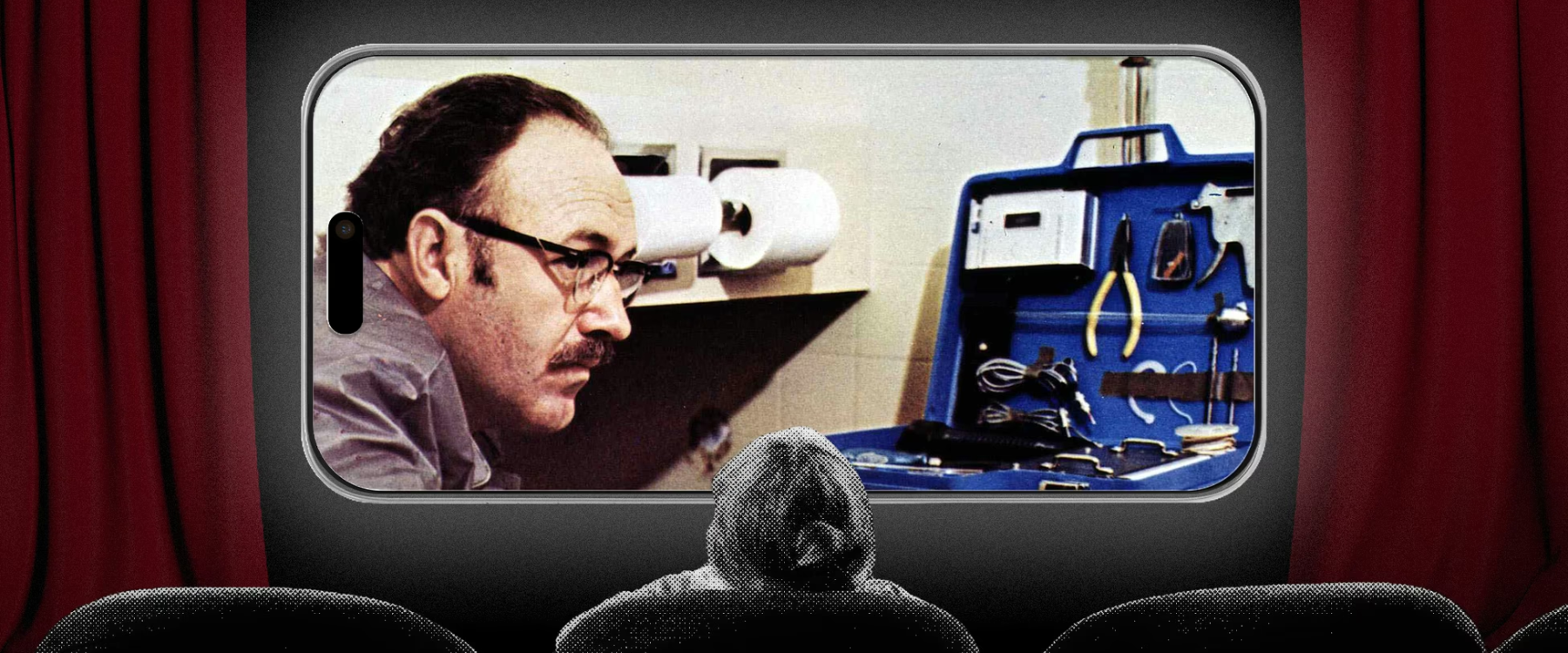
Film Students Can No Longer Sit Through Films

Last month, The Atlantic published an article with an alarming headline: ​“The Film Students Who Can No Longer Sit Through Films.”​

The author of the piece, Rose Horowitch, spoke with professors around the country who have begun to complain about this trend. What she learned was disheartening:

“I used to think, if homework is watching a movie, that is the best homework ever,” Craig Erpelding, a film professor at the University of Wisconsin at Madison, told me. “But students will not do it.”

I heard similar observations from 20 film-studies professors around the country. They told me that over the past decade, and particularly since the pandemic, students have struggled to pay attention to feature-length films.

What’s the source of this attention span crisis? The professors interviewed for Horowitch’s article point to a clear culprit: smartphones.

The founding director of Tufts University’s Film and Media Studies, for example, tried to ban electronics during screenings, but found the rule impossible to enforce. “About half the class ends up looking furtively at their phones,” she said. Meanwhile, a Cinema and Media Studies professor at USC reports that his students remind him of “nicotine addicts going through withdrawal…the longer they go without checking their phone, the more they fidget.”

The mechanism at play here is an ability that reading scholar Maryanne Wolf calls cognitive patience, which is ​defined as​ the “ability to [maintain] focused and sustained attention and delay gratification, while refraining from multitasking.”

The presence of smartphones degrades cognitive patience because they activate neuronal bundles in our brain’s short-term reward system that anticipate a high expected value from picking up the device. These bundles effectively vote for the distracting behavior, creating a cascade of neurochemicals that are experienced as motivation to grab the phone. After a while, due to a lack of practice, you lose your comfort with sustained attention altogether.

It’s no wonder more and more people lack the cognitive patience to make it through a two-hour film!

But as I elaborate on my ​podcast this week​, in this specific problem with movies, we can find a solution to the more general issue of weakened attention. Why not make the ability to watch an entire film a training goal for the attempt to reclaim our brains? Like the new runner working up to completing their first 5k, it’s a milestone that’s challenging, but not too challenging, and therefore a great way to begin an effort toward attention autonomy.

Read more

What I Learned from MasterClass

Last fall, I filmed a course for MasterClass. It’s mainly based on my book Slow Productivity, but there’s some Deep Work in there too. It’s called: ​“Rebuild Your Focus & Reclaim Your Time.”​

The course launched last week, so you should definitely ​check it out​. It gets to the core of a lot of the topics we tackle in this newsletter about the intersection of technology and productivity, and it’s an incredibly polished final product.

It’s actually this latter point that I want to talk a little bit more about today, as it sparks an interesting question about the future of online media more generally…

Read more

The Dangers of “Vibe Reporting” About AI

Last week, news broke that Amazon would be laying off 16,000 workers. Here was the headline ​from an article​ about this news published in Quartz:

The implication of this framing is clear: AI is taking jobs.

Nothing in the body of this article contradicts this idea. It describes the number of people laid off and the benefits they’ll receive. It quotes executives who won’t deny the possibility of future job losses. It mentions how Amazon is known for its “cutthroat” corporate culture.

You walk away feeling that the impact of AI on our economy is already getting out of hand.

The only problem is that this reporting omits almost all relevant details.

Read more

Be Wary of Digital Deskilling

Last week, Boris Cherny, the creator and head of Anthropic’s popular Claude Code programming agent, posted ​a thread on X​ about how he personally used the AI tool in his own work. It created a stir. “What began as a casual sharing of his personal terminal setup has spiraled into a viral manifesto on the future of software development,” explained a VentureBeat article​ about the incident.

As Cherny explained, he runs five different instances of the coding agent at the same time, each in its own tab in his terminal: ‘While one agent runs a test suite, another refactors a legacy module, and a third drafts documentation.’ He cycles rapidly through these tabs, providing further instruction or gentle prods to each agent as needed, checking their work, and sending them back to improve their output.

One user, responding to the thread, ​described the approach​ like playing the famously fast-paced video game Starcraft. The VentureBeat article described Cherny as operating like a “fleet commander.” It all seemed like a lot of fun.

But here’s the thing: If I were a software developer, I would be wary of any such demonstration.

Read more