Ten years ago, I published Deep Work. It was my second mainstream hardcover idea book. The previous title, So Good They Can’t Ignore You, hadn’t sold as well as we hoped, so the expectations were lower for this follow-up.
This turned out to be freeing, as it allowed me to write Deep Work largely for myself – exploring the conceptual edges of the issues surrounding distraction that interested me most.
I was fascinated, for example, by the economic reality that so many knowledge work organizations systematically undervalued focus, and was convinced that this provided a massive opportunity for those willing to correct for this mistake. In this way, I saw myself as articulating something like Moneyball for the cubicle class. I also firmly believed that the act of thinking was at the core of the post-Paleolithic human experience; the source of our greatest ideas, satisfactions, and even moments of transcendence.
This mixture of the economic and philosophical was different from the typical book in this genre at the time. Readers probably expected that I would open on a breathless tale of an overworked executive, then regurgitate some stats about interruptions, before proceeding with long lists of tips calibrated to be practical, but also not too challenging, presented in a conversational tone and accompanied by clearly manipulated case studies.
But Deep Work was much weirder and more intense than that. Re-reading it recently, I was struck by how many of my stories had nothing to do with the knowledge sector at all. I quoted philosophers of religion and a blacksmith who forged swords with ancient techniques. I profiled a memory champion and discussed chavruta, the Jewish practice of studying Talmud or Torah in pairs. Rather than opening the book on a frustrated executive, I focused on Carl Jung’s efforts to break free from Sigmund Freud’s capriciousness. It was a direct look at the sources and ideas that most resonated with me.
This idiosyncratic approach seemed to reveal something fundamentally true about the problematic state of work at that time, as the book soon found an audience, going on to sell more than two million copies in over forty-five languages. (In its wake, So Good They Can’t Ignore You finally found its groove as well, quietly selling more than half a million copies, providing me with a dash of retrospective vindication.)
All of this led me recently to ask a natural follow-up question: How have things changed since that book first came out in 2016?
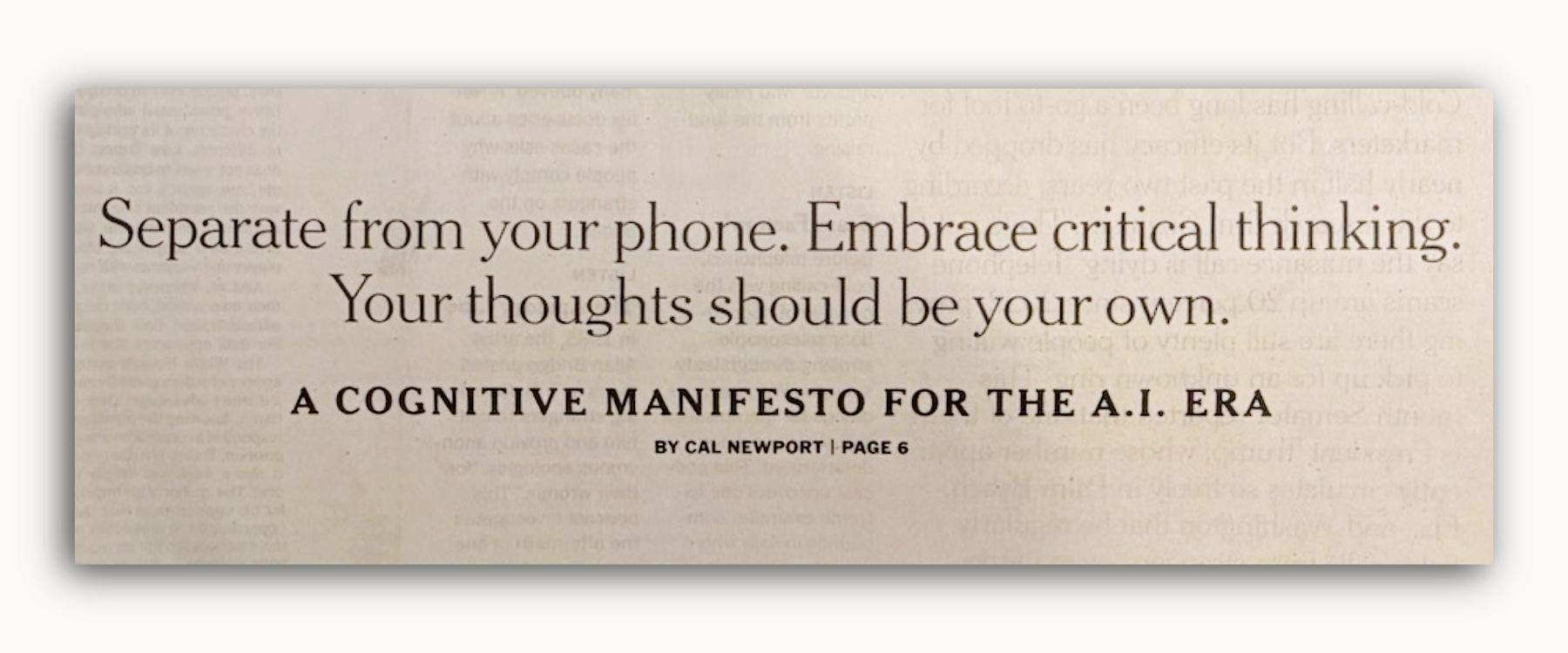
I tackled this query in a long-form essay I published in the New York Times over the weekend. My answer wasn’t optimistic: