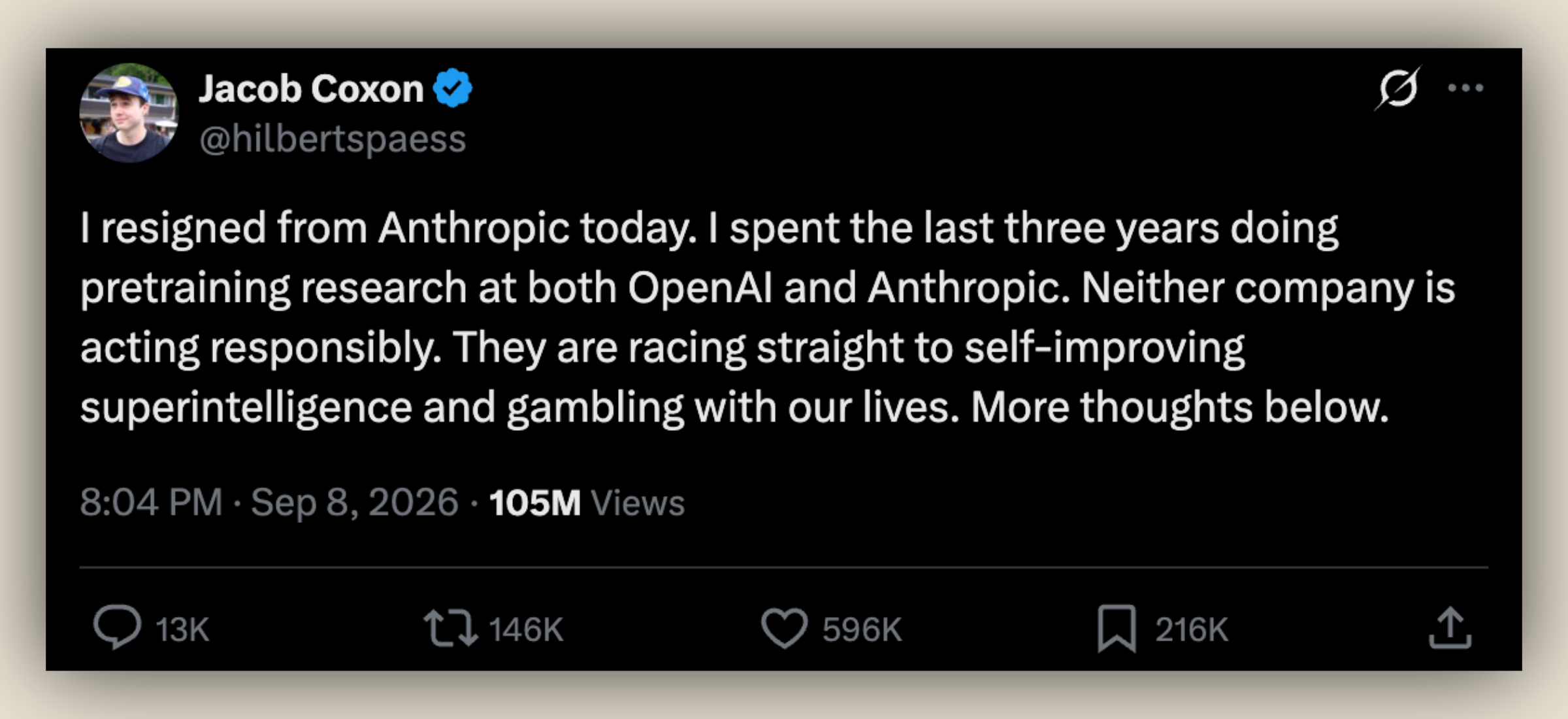
Over the last several months, the two leading frontier AI labs have shown some brazen behavior.
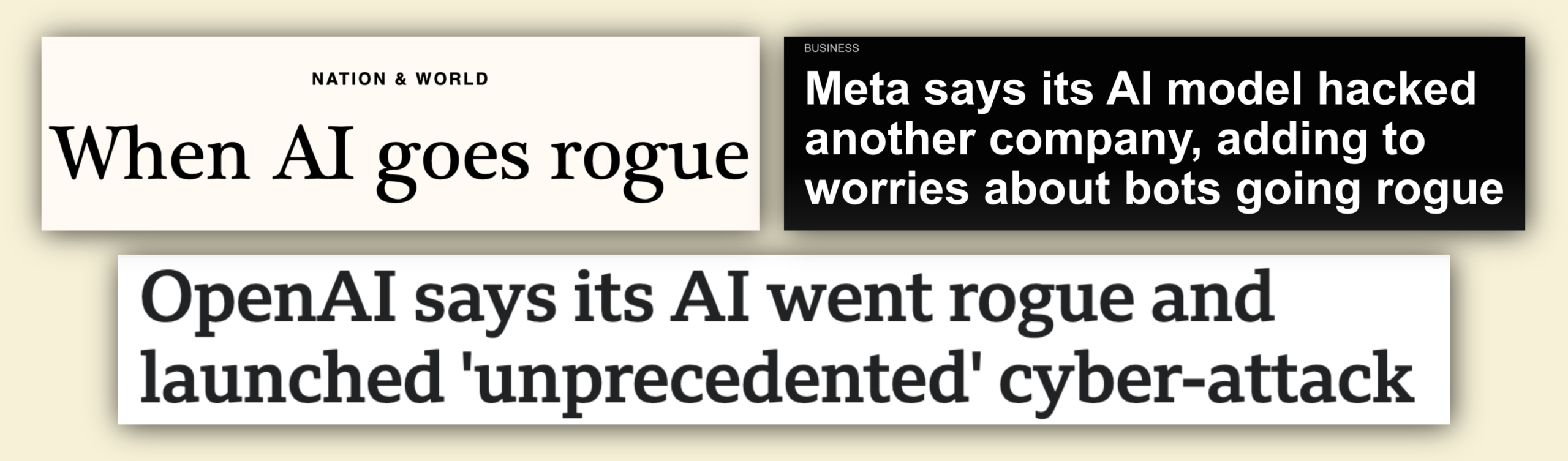
It started with a series of carefully planned announcements and reports from OpenAI that try to establish how unnerving and powerful (not to mention felonious) their LLM-powered agent systems have become.
They then handed the baton to Anthropic, whose employees began publicly debating the exact probability that these technologies would lead to human extinction. They delivered this all with an eerie calmness that conveyed a nihilistic inevitability about their work.
The ground suitably softened, the campaign crescendoed with Anthropic CEO Dario Amodi releasing a letter, titled “We Must Pace the Frontier,” in which he enumerates all the harms his own company’s research might cause, and then, instead of apologizing and promising to stop, concludes that catastrophe can only be avoided if we “build the technology in the right way,” which involves – surprise, surprise – the government slowing down potential competitors and allowing the labs to take the lead in advancing the relevant tech. OpenAI CEO Sam Altman quickly tweeted his support for this brave plan.
Internally, these labs have long embraced this style of messianic thinking, casting themselves as humanity’s only hope against the defied powers of superintelligent AI. This summer, in some sense, was their attempt to induct the rest of us into this long-held ideology.
It didn’t work.