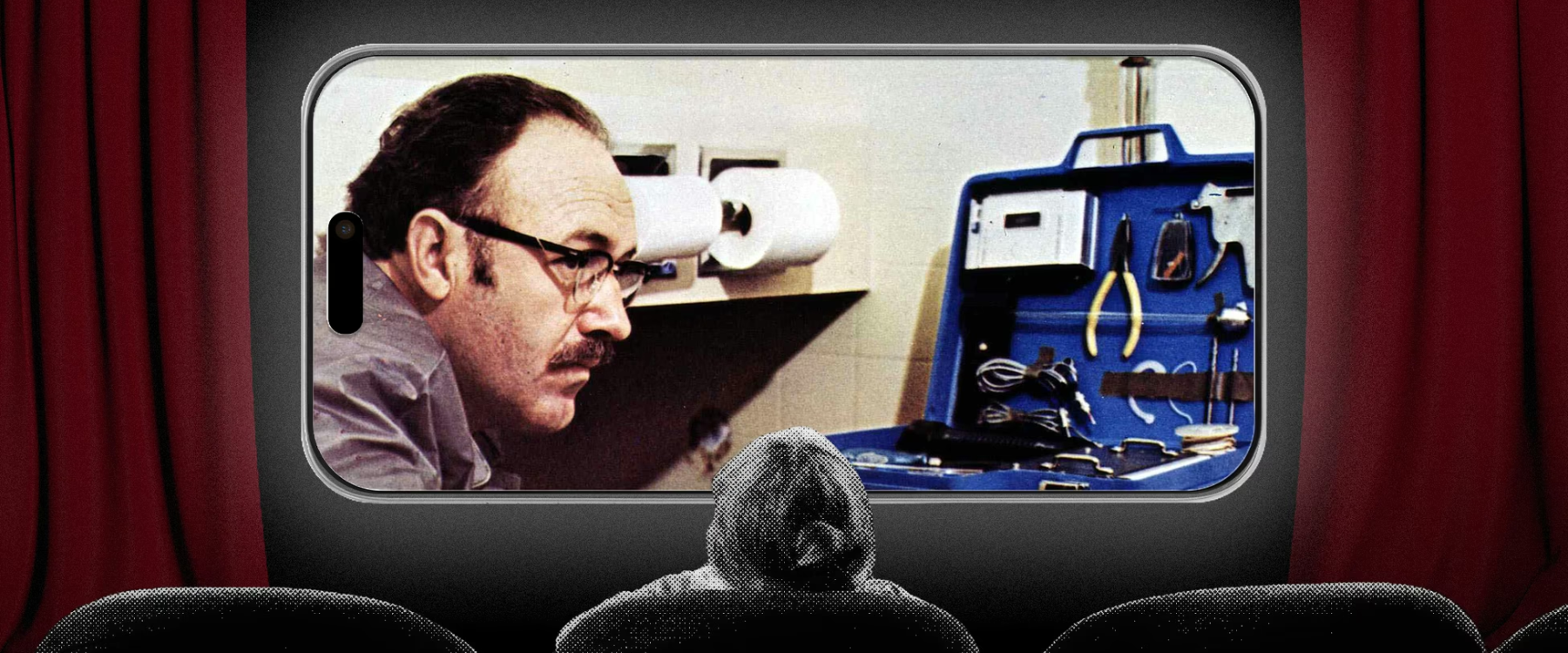
Last month, The Atlantic published an article with an alarming headline: “The Film Students Who Can No Longer Sit Through Films.”
The author of the piece, Rose Horowitch, spoke with professors around the country who have begun to complain about this trend. What she learned was disheartening:
“I used to think, if homework is watching a movie, that is the best homework ever,” Craig Erpelding, a film professor at the University of Wisconsin at Madison, told me. “But students will not do it.”
I heard similar observations from 20 film-studies professors around the country. They told me that over the past decade, and particularly since the pandemic, students have struggled to pay attention to feature-length films.
What’s the source of this attention span crisis? The professors interviewed for Horowitch’s article point to a clear culprit: smartphones.
The founding director of Tufts University’s Film and Media Studies, for example, tried to ban electronics during screenings, but found the rule impossible to enforce. “About half the class ends up looking furtively at their phones,” she said. Meanwhile, a Cinema and Media Studies professor at USC reports that his students remind him of “nicotine addicts going through withdrawal…the longer they go without checking their phone, the more they fidget.”
The mechanism at play here is an ability that reading scholar Maryanne Wolf calls cognitive patience, which is defined as the “ability to [maintain] focused and sustained attention and delay gratification, while refraining from multitasking.”
The presence of smartphones degrades cognitive patience because they activate neuronal bundles in our brain’s short-term reward system that anticipate a high expected value from picking up the device. These bundles effectively vote for the distracting behavior, creating a cascade of neurochemicals that are experienced as motivation to grab the phone. After a while, due to a lack of practice, you lose your comfort with sustained attention altogether.
It’s no wonder more and more people lack the cognitive patience to make it through a two-hour film!
But as I elaborate on my podcast this week, in this specific problem with movies, we can find a solution to the more general issue of weakened attention. Why not make the ability to watch an entire film a training goal for the attempt to reclaim our brains? Like the new runner working up to completing their first 5k, it’s a milestone that’s challenging, but not too challenging, and therefore a great way to begin an effort toward attention autonomy.
Read more