NEW BOOK!
Explore a better way to work – one that promises more calm, clarity, and creativity.

Study Hacks Blog

Why Are We Talking About Superintelligence?

A couple of weeks ago, Ezra Klein ​interviewed​ AI researcher Eliezer Yudkowsky about his new, cheerfully-titled book, If Anyone Builds it, Everyone Dies.

Yudkowsky is worried about so-called superintelligence, AI systems so much smarter than humans that we cannot hope to contain or control them. As Yudkowsky explained to Klein, once such systems exist, we’re all doomed. Not because the machines will intentionally seek to kill us, but because we’ll be so unimportant and puny to them that they won’t consider us at all.

“When we build a skyscraper on top of where there used to be an ant heap, we’re not trying to kill the ants; we’re trying to build a skyscraper,” Yudkowsky explains. In this analogy, we’re the ants.

In this week’s ​podcast episode​, I go through Yudkowsky’s interview beat by beat and identify all the places where I think he’s falling into sloppy thinking or hyperbole. But here I want to emphasize what I believe is the most astonishing part of the conversation: Yudkowsky never makes the case for how he thinks we’ll succeed in creating something as speculative and outlandish as superintelligent machines. He just jumps right into analyzing why he thinks these superintelligences will be bad news.

The omission of this explanation is shocking.
Read more

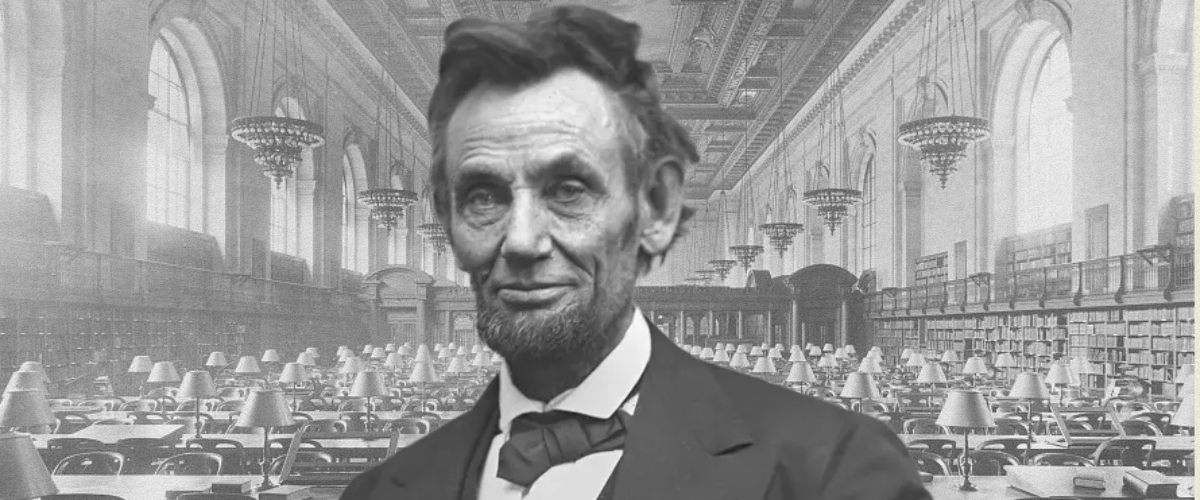
What If Lincoln Had a Smartphone?

Back in 2008, when I was still early in my writing career, I published an essay on my blog that posed a provocative question: Would Lincoln Have Been President if He Had Email? This was one of my early attempts to grapple with problems like digital distraction and focus that would eventually evolve into my books Deep Work and A World Without Email. And at its core was a troubling notion that occurred to me in response to watching a documentary about our sixteenth president:

If the Internet is robbing us of our ability to sit and concentrate, without distraction, in a Lincoln log cabin style of intense focus, we must ask the obvious question: Are we doomed to be a generation bereft of big ideas?

If Lincoln had access to the internet, in other words, would he have been too distracted to become the self-made man who ended up transforming our fledgling Republic? 

In this early essay, I leaned toward the answer of “yes.” But in the years since, I’ve become a bit of a Lincoln obsessive, having read more than half a dozen biographies. This has led me to believe that my original instincts were flawed.

Read more

Is Sora the Beginning of the End for OpenAI?

On ​my podcast this week​, I took a closer look at OpenAI’s new video generation model, ​Sora 2​, which can turn simple text descriptions into impressively realistic videos. If you type in the prompt “a man rides a horse which is on another horse,” for example, you get, well, this:

AI video generation is both technically interesting and ethically worrisome in all the ways you might expect. But there’s another element of this story that’s worth highlighting: OpenAI accompanied the release of their new Sora 2 model with a new “social iOS app” called simply Sora.

Read more

What Neuroscience Teaches Us About Reducing Phone Use

This week on my podcast, I delved deep into the neural mechanisms involved in making your phone so irresistible. To summarize, there are bundles of neurons in your brain, associated with your short-term motivation system, that recognize different situations and then effectively vote for corresponding actions. If you’re hungry and see a plate of cookies, there’s a neuron bundle that will fire in response to this pattern, advocating for the action of eating a cookie.

The strength of these votes depends on an implicit calculation of expected reward, based on your past experiences. When multiple actions are possible in a given situation, then, in most cases, the action associated with the strongest vote will win out.

One way to understand why you struggle to put down your phone is that it overwhelms this short-term motivation system. One factor at play is the types of rewards these devices create. Because popular services like TikTok deploy machine learning algorithms to curate content based on observed engagement, they provide an artificially consistent and pure reward experience. Almost every time you tap on these apps, you’re going to be pleasantly surprised by a piece of content and/or find a negative state of boredom relieved—both of which are outcomes that our brains value.

Due to this techno-reality, the votes produced by the pick-up-the-phone neuron bundles are notably strong. Resisting them is difficult and often requires the recruitment of other parts of your brain, such as the long-term motivation system, to convince yourself that some less exciting activity in the current moment will lead to a more important reward in the future. But this is exhausting and often ineffective.

The second issue with how phones interact with your brain is the reality that they’re ubiquitous. Most activities associated with strong rewards are relatively rare—it’s hard to resist eating the fresh-baked cookie when I’m hungry, but it’s not that often that I come across such desserts. Your phone, by contrast, is almost always with you. This means that your brain’s vote to pick up your phone is constantly being registered. You might occasionally resist the pull, but its relentless presence means that it’s inevitably going to win many, many times as your day unfolds.

~~~

Read more

The Great Alienation

Last week, I published an essay about the so-called Great Lock In of 2025, a TikTok challenge that asks participants to tackle self-improvement goals. I argued that this trend was positive, especially for Gen Z, because the more you take control of your real life, the easier it becomes to take control of your screens.

In response, I received an interesting note from a reader. “The biggest challenge with this useful goal Gen Z is pursuing,” he wrote, “is they don’t know what to do.”

As he then elaborates:

“Most of them are chasing shiny objects that others are showing whether on social media or in real life. And when they (quickly) realize it’s not what they want, they leave and jump on to something else…this has been a common problem across generations. But Gen Z, and youngsters after it, are making things worse by scrolling through social media hoping to find their purpose by accident (or by someone telling them what they should do).”

Here we encounter one of the most insidious defense mechanisms that modern distraction technology deploys. By narrowing its users’ world to ultra-purified engagement, these platforms present a fun-house mirror distortion of what self-improvement means: shredded gym dwellers, million-subscriber YouTube channels, pre-dawn morning routines. Because these “shiny” goals are largely unattainable or unsustainable, those motivated to make changes eventually give up and return to the numbing comfort of their screens.

By alienating its users from the real world, these technologies make it difficult for them to ever escape the digital. To succeed with the Great Lock In, we need to resolve the Great Alienation.

Read more

The Great Lock In of 2025

If there’s one thing that I’m always late to discover, it has to be online youth trends. True to form, I’m only now starting to hear about the so-called “Great Lock In of 2025.”

This idea began circulating on TikTok over the summer. Borrowing the term ‘lock in’, which is Gen Z slang for focusing without distraction on an important goal, this challenge asks people to spend the last four months of 2025 working on the types of personal improvement resolutions that they might otherwise defer until the New Year. “It’s just about hunkering down for the rest of the year and doing everything that you said you’re going to do,” explained one TikTok influencer, ​quoted recently​ in a Times article about the trend.

Listeners of my podcast know that I’m a fan of the strategy of dedicating the fall to making major changes in your life. My episode on this topic, ​How to Reinvent Your Life in 4 Months​, which I originally aired in 2023 and re-aired this past summer, is among my most popular – boasting nearly 1.5 million views on YouTube.

To me, however, the more significant news contained in this trend is the generalized concept of ‘lock in’, which has become so popular among Gen Z that the American Dialect Society voted it the “most useful” term of 2024.

Read more

Does WiFi Make Students Smarter?

At a time when educators are increasingly concerned about technology’s impact in the classroom, the Washington Post published ​an op-ed​ with a contrarian tone. The piece, written by the journalism professor Stephen Kurczy, focuses on Green Bank, a small town in rural West Virginia, home to the world’s largest steerable radio telescope. Due to the sensitivity of this device, the entire area is a congressionally designated “radio quiet zone” in which cell service and WiFi are banned.

The thought of a disconnected life might sound refreshing, but as this op-ed argues, there’s one group for which this reality might be causing problems: the students in Green Bank’s combined elementary and middle school.

“Without WiFi, the 200 students couldn’t use Chromebooks or digital textbooks, or do research online,” Kurczy writes. “Teachers couldn’t access individualized education programs online or use Google Docs for staff meetings.”

Some teachers in the school are frustrated. “The ability to individualize learning with an iPad or a laptop – that’s basically impossible,” explained one teacher, quoted in the piece. “Without the online component of our curriculum fully working, it’s really detrimental to our instruction,” said another.

These concerns aren’t merely hypothetical. As Kurczy points out: “Green Bank consistently [posts] the lowest test scores in the county.” He quotes the school’s principal, who blames this on the students’ “lack of access to engaging technology.”

The message of this op-ed is clear. At a time when we’re rushing to condemn phones in classrooms, we should be careful not to extend this ire to other ed-tech innovations, as without these, students struggle.

It’s a tidy point. But is it true? I decided to dig a little deeper…

Read more