NEW BOOK!
Explore a better way to work – one that promises more calm, clarity, and creativity.

Study Hacks Blog

Building a WWII Bunker in an Office Building

A reader recently sent me another entertaining example of the deep life in action.

He runs a design firm with an office in a warehouse-style building that included a cool feature: a “patio,” cantilevered high above the main floor, where he could relax or chat with coworkers.

“While visually very compelling this was a disaster,” he explained. “I basically had thin glass separating [it] from a warehouse where lots of people used, ate lunch, etc…a space with absolutely no functional use.”

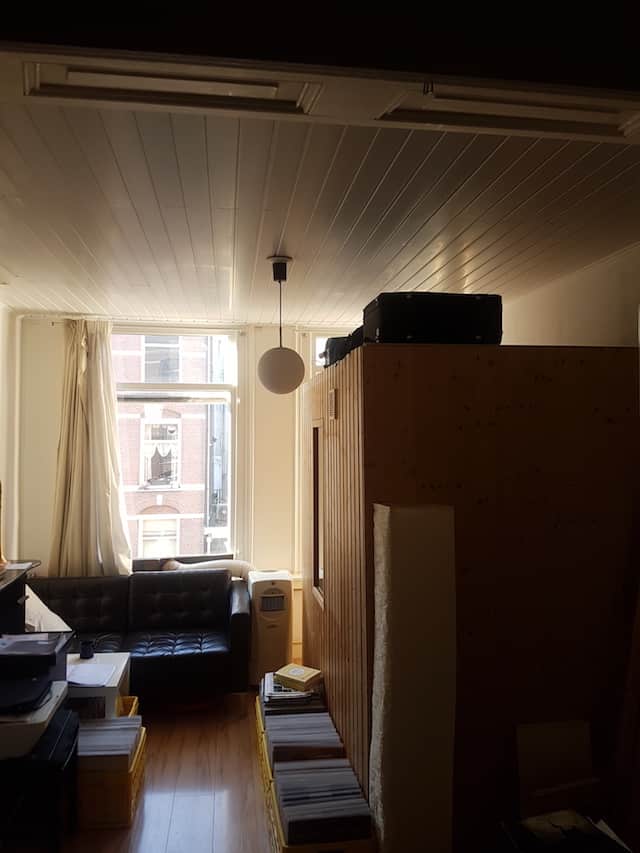
Then last summer, on a visit to London, he toured the Churchill War Rooms, a warren of bomb-proof underground bunkers where Winston Churchill and his war cabinet plotted out the Second World War (see above photo). It resonated.

Read more

Bring Back Blogs?

My latest article for WIRED offers a suggestion about improving our information response to the current pandemic.

In the piece I acknowledge that Twitter’s algorithms, in particular, have actually been pretty useful in helping to surface otherwise obscure experts who are suddenly intensely relevant to the moment (I document, for example, how virologist Trevor Bedford jumped from 10,000 to 200,000 followers since February).

But convoluted Tweet threads and thumbnail screenshots of longer articles are a poor way for these experts to explore evolving, complicated ideas.

My solution:

Read more

Building a Deep Work Cabin…in an Apartment

I recently received an attention-catching email from a 29-year-old professional trumpet player. He told me that during his first year studying at a well-known music conservatory his girlfriend convinced him to join Facebook. “Somehow I had a feeling that the whole thing robs me from practicing the trumpet and getting things done,” he said.

So between 2013 and 2015, he took a two-year break to focus on his training, and ended up writing a Master’s Thesis and graduating with a very high grade point average. “These results are directly linked to abandoning social media,” he explained.

In 2015, he rejoined Facebook, pressured by the idea that professional musicians must promote themselves online to get ahead. “It did more harm,” he wrote, “sucking me back into compulsive clicking and wasting time.”

After coming across Deep Work and (later) Digital Minimalism, he decided to leave social media for good and prioritize focused work on a small number of important pursuits. “To take back control and stay true to my own nature,” he summarized.

The decision paid off. He recorded four albums in four years, and more recently, in just two months, made it 30 chapters into a textbook he’s writing on trumpet methods.

Then came our current disruption.

Read more

More on Cultivating a Deep Life: Mindset

In yesterday’s post, I discussed an approach for systematically increasing the depth in your life. It involved creating a monthly plan that identifies specific behaviors designed to amplify things that matter and reduce the things that distract you from these values.

Today, I want to add a caveat. In my many years experimenting (often publicly) with the elements of the deep life, I’ve come to accept that the right mindset is just as important as the right plan.

You can have a well-designed checklist of meaningful activities you’re trying to integrate into your routine, but if your background hum of activity is still oscillating wildly between frenetic stress and numbing distraction, your life is anything but deep. You need instead to see your entire day differently.

This mindset is well-summarized by the advice I’ve been giving off and on since the early days of this blog:

  • Do less.
  • Do better.
  • Know why.

Let’s elaborate the elements of this self-improvement catechism one by one:

Read more

Cultivating a Deep Life

  Craft Community Contemplation Constitution Amplify Learn AirTable; produce application for inventory system. Volunteer for local Meal on Wheels chapter. Observe Shabbat. Eat clean; 10,000 … Read more

Beyond To-Do Lists

I was talking recently with a friend who is a project manager at a tech company who happens to also be particularly interested in productivity … Read more

The Dichotomy of Email

I want to add a quick addendum to my recent series of posts about avoiding email overwhelm in our current moment of total remote work. … Read more

Beyond the Inbox: Rules for Reducing Email

In my last post, I warned that a sudden shift to remote work could inadvertently push knowledge workers into a state of inbox capture, in which essentially all of their time outside of Zoom calls ends up dedicated to sending and receiving email (or Slack messages). As I hinted, I think the best solutions here require radical changes to how these organizations operate. In the short term, however, I thought it might be useful to provide a few ideas about what individuals can do right away to avoid the perils of this state of capture.

It’s important to first bust a popular belief. The key to spending less time in your inbox is not simply to check it less often. This advice is out of date, echoing a simpler time when emails were novel. In recent years, of course, this technology has (unfortunately) become the medium in which most work now unfolds. Ignoring your inbox for long stretches with no other accommodations might seriously impair your organization’s operation.

What’s instead imperative is to move more of this work out of your inbox and into other systems that better support efficient execution. You can’t, in other words, avoid this work, but you can find better alternatives to simply passing messages back and forth in an ad hoc manner throughout the day.

Here are three concrete rules along these lines to help clarify what I mean…

Read more