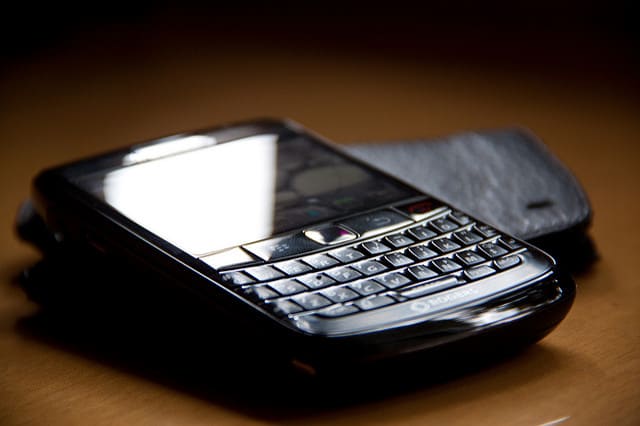
When I was researching Digital Minimalism, I came across an interesting article written by Vlad Savov for The Verge. It was titled: “It’s time to bring back the dumb phone.”
I’ve both read and written numerous articles about the negative aspects of the modern smartphone, and have interviewed many people who have returned to a simpler alternative with few regrets.
But what caught my attention about Savov’s piece was the following new (to me) argument he made in favor of stepping back from these devices:
“This is not as drastic a regression as you might think — or as it might have been a few years ago. In the age before paper-thin tablets and laptops, your smartphone truly was the only viable connected device you could carry around everywhere.
But nowadays? I have paper pads thicker and heavier than the Apple MacBook…[y]ou can tuck a tablet discreetly into a large jacket pocket, and it can connect to LTE networks.”
Like Proust’s Madeleine, this comment sparked in me memories of the early smartphone era; a time when laptops were large, bulky affairs and accessible WiFi connections scarce. In this context, a “smart” phone that might allow you to send an email or perform rudimentary document edits could significantly improve your productivity when away from the office.
But as Savov notes, there are now many other affordable, portable, connected devices that offer much better productivity experiences than even the largest phone.
So why do smartphones persist in a world where their original rationale has dissipated?
My current theory: Steve Jobs.