Apr 01
Note: Though my new format focuses on publishing in-depth articles twice a month, I still reserve the right to occasionally publish one my classic-style student advice articles.

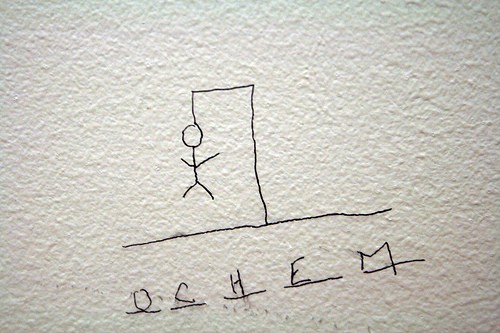
The Pre-Med’s Lament
I recently received the following e-mail:
“I’ve failed both of my tests in Organic Chemistry 2…I don’t know what I’m doing wrong…no matter how much I review or study my class notes, nothing seems to work.”
This is a familiar lament. I recently reviewed the student e-mails I’ve received so far in 2010, and discovered that I average around one “I failed my Orgo exam!” e-mail per week.
That’s a lot of unhappy pre-meds.
I decided it was time to write a definitive answer to this common issue. This post details my famous three-step plan for turning around a chemistry disaster.
Read the rest of this entry »
Jan 13

From 30 Minutes of Studying to a 4.0
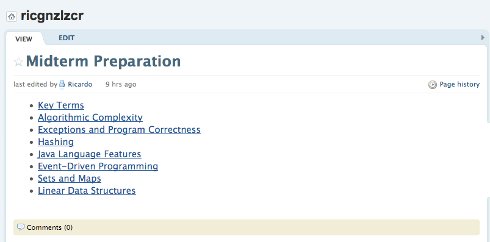
I recently received an e-mail from Ricardo, a sophomore majoring in computer science at the University of Maryland. For the past three semesters he has maintained a 4.0 GPA — a feat he accomplished “without stressing at all.” At the core of his success is an unconventional technique that makes use of a wiki, his iPhone, and my infamous stealth studying philosophy. This technique is so effective that he dedicates only 30 minutes to review on the day before his computer science exams — yet still aces them.
In this post, I detail Ricardo’s method, including step by step instructions and screenshots…
Read the rest of this entry »
Nov 17
A Sinful Omission
The red book splits academic subjects into two groups: technical and non-technical. The former covers any course with problems to be solved. The latter describes subjects that have you express your knowledge with essay questions and papers.
This taxonomy, however, has a gaping hole: non-technical science courses. These include biology, psychology, or any other subject that requires you to learn lots of technical information, but tests you predominantly with multiple-choice and short-answer questions.
I thought it was time to put together a short, canonical guide to tackling this type of material…
Read the rest of this entry »
Sep 14
Peer Pressure
In the summer of 2000, a Dartmouth economist named Bruce Sacerdote published a paper titled Peer Effects in Randomly Assigned Roommates. His premise was interesting: Incoming students at Dartmouth are assigned to rooms at random. He knew, therefore, that when two roommates first arrive on campus, their behavior should have no more in common than any other pair of students.
Sacerdote’s insight was to wait until the end of the year and then look for traits that roommates had become more likely to share than random pairs. The idea was that these shared traits would be due to the roommates’ influence on each others’ behavior.
Sacerdote found that for some behaviors, such as major choice, roommates didn’t affect each other. But for one trait in particular, GPA, they had a lot in common. He attributed this finding to a simple idea: students’ study habits are heavily influenced by their peers.
It’s important that you recognize this reality, because these peer influences shape more than you might imagine about your own habits. Like a pair of behavioral blinders, carefully slipped into place without you noticing, peer influence may have prevented you from seeing a variety of radical strategies that could greatly simplify your student life.
In this post, I want to describe one such strategy…
Read the rest of this entry »
May 18
Assuming the Worst
I recently received an e-mail from a student who was struggling in his calculus class. “I’m out of options,” he told me. “I practice the problems in the book again and again, and I still do poorly on the tests.” He concluded that he just didn’t “get math.”
I told this story because it highlights a common problem. I’m not talking about math difficulties. Instead, the real issue here is the danger of hidden assumptions. This student was confounded by his assumption that reviewing practice problems is the way to study for math. He decided, therefore, that the only way to improve his grades was to spend more time. Not surprisingly, this did little help — leading to his catastrophic conclusion that he simply couldn’t handle the work.
He needed to change the foundation of his study philosophy, but couldn’t see beyond the surface.
Read the rest of this entry »
May 04
Better Autopilots
As longtime Study Hacks readers know, I’m a big promoter of the autopilot schedule. In case you’re new, let me briefly review: The autopilot schedule is a set of fixed times and locations for finishing your regular work each week. For example, you might decide to always tackle your history reading assignments Monday morning, from 9 am to 11 am, in the study carrels found on the 6th floor stacks of the main library.
The shadow course, described below, is a simple optimization to the autopilot schedule that can generate huge benefits.
Read the rest of this entry »
Apr 20
4 Weeks to a 4.0 is a four-part series to help you transform into an efficient student. Each Monday between 3/30 and 4/20 I’ll post a new weekly assignment to aid your transformation.
Welcome to Week 4
This is the fourth and final post in our four-part series 4 Weeks to a 4.0. Let’s do our review. In week one you gained some control over your schedule. In week two you mastered taking notes in class. And in week three you streamlined your assignments. In other words, we’ve covered all regularly occurring academic work. This leaves us only to tackle the big infrequent stuff. I’m talking about studying for exams and writing papers.
Week 4 Assignment: Create Project Folders
Your assignment for this week to adopt the project folder method, which I describe below. This simple method streamlines the process of studying for exams and writing major papers. I used it throughout my time at Dartmouth, and swear by its effectiveness. You can also see aspects of it in action in our ongoing finals diaries series.
Read the rest of this entry »
Apr 16
Caltech Calculus
This is the first post in the finals diaries series, which follows a group of students through their quest to improve their study habits in time for spring exams. We start with Travis, a freshman physics major from Caltech. In May, he faces a brutal multivariate calculus exam. This leaves him a little less than a month to toss out his existing habits, which he candidly describes as “less than stellar,” and embrace a more efficient academic lifestyle.
Plan A
As with all of my volunteers, I asked Travis to describe his current plan for preparing for this test. He replied:
It will boil down to taking a couple of weeks before finals and figuring out what I don’t know, trying to brush up on what I may have forgotten, and doing some example problems.
This, of course, is exactly the type of vagueness that drives students to last minute scrambles and incomplete preparation. Luckily, Travis still has time to change his ways.
Read the rest of this entry »