Study Hacks Blog

Focus Week: Give Your Brain Some Breathing Room

I opened my book Digital Minimalism with an excerpt from an Andrew Sullivan essay, published in New York magazine in 2016. “An endless bombardment of news and gossip and images has rendered us manic information addicts,” Sullivan warned. “It broke me. It might break you, too.”

I noted that Sullivan’s experience as a burnt out professional blogger was extreme, but that a diminished echo of his distress was beginning to spread through a culture increasingly glued to its phones. Over the past five months, this diminished echo has exploded into full out replication. We no longer just feel hints of Sullivan’s distress; we’re living it completely.

The anxious uncertainty of the pandemic, combined with social and political unrest, combined with an information landscape dominated by a tribalized social media, is breaking us. Our days are fragmented by a fast drip of insistently panicked content that wrings anxiety, outrage, and fear from our autonomic nervous systems until we’re left exhausted and emotionally dry.

If you’ll excuse the understatement: this is not good.

It is with these observations in mind that I think a fitting place to start Focus Week is with an urgent plea to unplug — to allow the fragments of your attention to coalesce back into meaningful stretches of presence, and your emotions to re-stabilize. You cannot reclaim a life of focus until you reclaim your brain from the distractions that have ensnared it in recent months.

I have two concrete pieces of advice to offer. The first concerns news consumption. To abstain from all information about the world at this current moment would be a betrayal of your civic duty. On the other hand, to monitor every developing story in real time, like a breaking news producer, is a betrayal of your sanity.

I suggest the following compromise: check in on the news for 45 minutes, once a day, preferably in the morning.


Read more

Returning to a Life of Focus

Last fall, Scott Young and his team flew down to Washington D.C., to join me in a Capitol Hill film studio to begin production on the long-awaited sequel to our popular Top Performer online course. Whereas that previous course helped people take action on the career advice from my book So Good They Can’t Ignore You, this new course was motivated by the ideas explored in the trio of bestsellers on concentration and distraction that Scott and I have published in the years since: Deep Work, Digital Minimalism, and Ultralearning.

We decided to call it: Life of Focus.

When production began, we had no way of predicting the upheaval the world was going face just a few months later due to the coronavirus pandemic. As we put the finishing touches on the course over the spring and into the summer, it became clear that the need to reclaim a life of focus had suddenly become perhaps more important than any time in recent memory.

Read more

Ray Bradbury Got It Exactly Right

Ray Bradbury’s short story, The Murderer, first published in his 1953 collection, The Golden Apples of the Sun, begins with a psychiatrist arriving at a mental hospital. He’s there to see a prisoner named Albert Brock, who calls himself: “The Murderer.”

When the psychiatrist enters the interview chamber, he frowns. “Something was wrong with the room.” He soon realizes the problem: the wall-mounted radio has been torn down and smashed.

As the psychiatrist sits down, Brock reaches out and quickly steals the visitor’s wrist radio, crunching it in his teeth like a walnut, before handing back the ruined device with a smile, explaining: “That’s better.”

It’s soon revealed that Brock is not imprisoned because of any harm he caused to other people. His crime was instead the wanton destruction of all the information, entertainment, and communication devices in his life: he fed his phone into his kitchen garbage disposal, shot his television with a gun, poured water into his office intercommunication system, stomped his wrist radio on the sidewalk, and spooned ice cream into his car’s FM transceiver.

As Brock elaborates, he’d become fed up with the constant communication, distraction, manipulation and digital anxiety that defined the near future world in which Bradbury’s story is set:

Read more

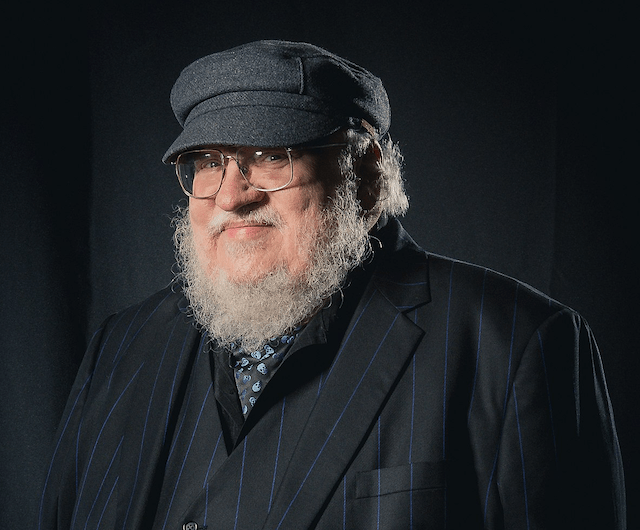
George R. R. Martin’s Pandemic Writing Retreat

As discussed in a blog post published earlier this week, Game of Thrones scribe George R. R. Martin is trying to take advantage of the pandemic to help finish The Winds of Winter,  the long awaited (and long overdue) next title in his epic fantasy series.

Years earlier, Martin bought the building across the street from his Santa Fe home to provide some separation between his personal and professional lives (“no longer would I write all day in my red flannel bathrobe”), but more recently he found even that space had become too distracting to properly concentrate.

So he’s now relocated to a remote mountain cabin with a bad internet connection where he can really get serious about writing.

Read more

Don’t Delegate Using Email

On the most recent episode of my podcast, Deep Questions, a listener asked for my advice about delegation. This is an important topic that I haven’t talked a lot about before, so I thought it might be useful to sharpen and elaborate the answer I gave on my show.

In the office setting, most delegation occurs over email. You need something done that you either don’t have the time to do, or don’t want to do, or don’t know how to do: so you shoot off a quick message to put in on someone else’s plate. Our current moment of remote work has made these electronic hand-offs even more frequent.

As I explained on my podcast, however, I think this is a problem. You’d probably be better off if you instead worked backward from a simple rule that will make your life more annoying in the short term, but significantly more productive in the long term: don’t delegate using email.

Before we discuss how this is even possible, let’s touch on why it’s important.

Read more

On the Subtle Network Science of Optimal Office Communication

Consider the following workplace scenario. The manager of an R&D lab needs her engineers to solve a complex problem. There are many possible approaches and it’s unclear which will end up best. What is the best way to structure their communication?

For at least the last twenty years, the accepted answer to this question within knowledge work has been to introduce the maximum amount of communication with the minimum possible friction. Email makes it simple for engineers to swap ideas and results. Instant messenger tools like Slack reduce friction even further and increase transparency. Progress!

The logic driving this consensus is straightforward: more information is strictly better than less; a veritable axiom of the burgeoning Information Age that has been widely accepted ever since Bill Gates touted his early-adoption of email as a strategy to broaden the incoming stream of ideas and insights on which his algorithmic brain could churn.

But is this answer always right?

Read more

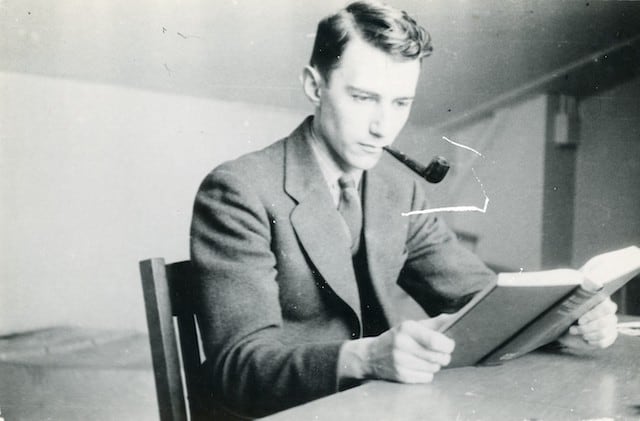
The Bit Player Who Changed the World

In 1937, at the precocious age of 21, an MIT graduate student named Claude Shannon had one of the most important scientific epiphanies of the century. To explain it requires some brief background.

Before coming to MIT, Shannon earned two bachelors degrees at the University of Michigan: one in mathematics and one in electrical engineering. The former degree exposed him to Boolean Algebra, a somewhat obscure branch of philosophy, developed in the mid-nineteenth century by a self-taught English mathematician named George Boole. This new algebra took propositional logic, a fuzzy-edged field of rhetorical inquiry that dated back to the Stoic logicians of the 3rd century BC, and cast it into clean equations that could be mechanically-optimized using the tools of modern mathematics.

Shannon’s degree in electrical engineering, by contrast, exposed him to the design of electrical circuits — an endeavor that in the 1930s still required a healthy dollop of intuition and art. Given a specification for a circuit, the engineer would tinker until he got something that worked. (Thomas Edison, for example, was particularly gifted at this type of intuitive electrical construction.)

In 1937, in the brain of this 21-year-old, these two ideas came together.

Read more

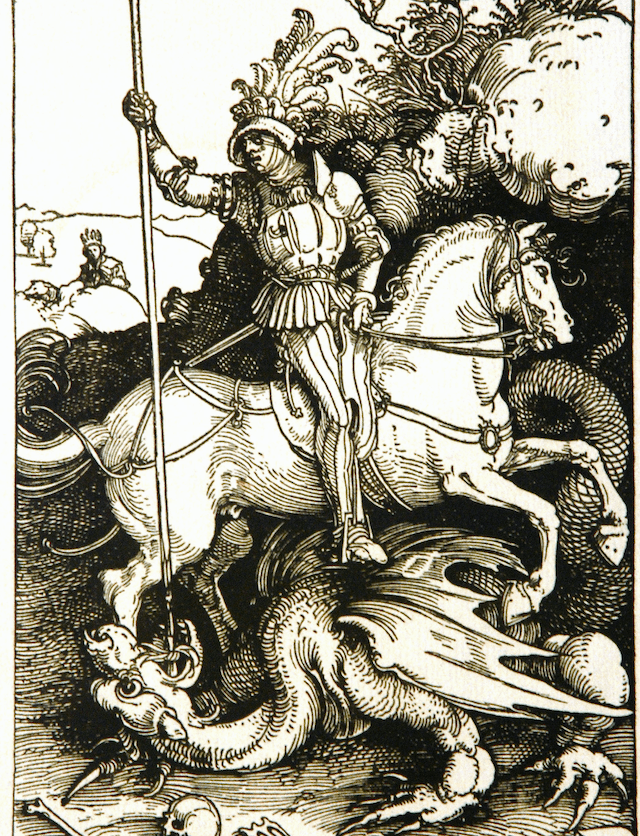
On Confronting the Productivity Dragon (take 2)

On a recent episode of my podcast, Deep Questions, a listener asked me what to do when one feels overwhelmed with incoming tasks, requests, and ambiguous obligations — a problem that has become unfortunately common in our current period of largely remote and persistently frenzied work.

The temptation in such moments is to curl up as the onslaught engulfs you; perhaps answering the most recent emails to arrive, or tackling a sampling of tasks that seem particularly urgent, but otherwise just hoping the rest will dissipate.

In the mythology of your professional life, in other words, you decline to confront the dragon, and instead put up a half-hearted warning sign, or rage to anyone in earshot about the unfairness of the dragon’s existence in the first place.

My advice was to resist this temptation.

Read more