Archive for the 'Tips: Fighting Procrastination' Category

An Argument for Quitting Facebook

Case Studies: The Advice in Action, Tips: Fighting Procrastination 77 Comments »

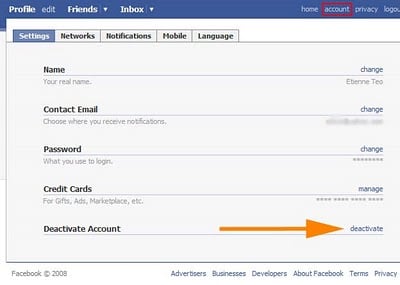
Deactivating Facebook

A Bold Decision

At the end of his first semester at Penn, a student whom I’ll call Daniel was disappointed to learn that his GPA was a lackluster 2.95. Following the Study Hacks orthodoxy that study habits should be based on evidence — not random decisions or peer pressure — Daniel asked himself a crucial question: What are the better students doing that I’m not?

When he surveyed his classmates, he noted something interesting: “the high-scoring kids weren’t on Facebook.”

Emboldened by this observation, Daniel decided to do the unthinkable: he deactivated his Facebook account.

His GPA jumped to an exceptional 3.95.

In this post, I want to share the details of Daniel’s story — revealing what actually happens when you quit one of the most ubiquitous technologies of your generation. I’ll then make the argument that although most students don’t need to leave Facebook, every student should at least give the idea serious consideration.

Read the rest of this entry »

The Grade Whisperer: Ron’s Feeble Focus

Tips: Fighting Procrastination 14 Comments »

The Grade Whisperer is an occasional feature in which I use the Study Hacks philosophy of do less, do better, and know why, to help students overcome their academic problems.

Feeble FocusAdvice

A student who I’ll call Ron recently sent me an e-mail with an ominous title: Loss of Focus.

“I really enjoy most of my courses,” he started. “And I’m definitely not in the wrong major…But there are some courses that I find extremely difficult and uninteresting.”

There’s nothing surprising about this observation. As I’ve said before, you have to expect that not every course is going to incite scholastic reverie — some subjects you just have to grin and bear en route to becoming “educated.”

Ron, as it turned out, was having trouble with the “grin and bear” part of this equation.

“I sit down, stare at the books, and nothing happens,” he told me.  “After reading and solving problems for 15 minutes I get bored and distracted, start surfing the web, checking email or such.”

He concluded with a key question that I receive often:

You mention that hard focus is necessary. I agree, but my question is: How can I focus on difficult, unenjoyable, painful tasks?

It sounds like a job for the grade whisperer…

Read the rest of this entry »

The Ice Bath Method: Easing Into Painful Projects

Tips: Fighting Procrastination, Tips: Time Management, Scheduling, & Productivity 15 Comments »

A Difficult Talk

Bailey Next week, I’m giving the Theory Colloquium lecture here at MIT’s computer science laboratory. This means I’m facing one of the most common and most dreaded tasks of academic life: writing a talk.

Constructing good talks slides is grueling. The task is not so large that it can become a harmless background task in your life, and it’s not so small that it can be dispatched in a single inspired dash. In other words, like all medium-sized hard projects, it’s a catalyst for procrastination.

Here’s how I’m handling it…

Read the rest of this entry »

Fighting the Pre-Exam Slump

Tips: Fighting Procrastination 12 Comments »

Procrastination RisesProcrastination

A reader recently sent me an e-mail in which she admitted:

I think I am starting to suffer from deep procrastination — and it’s only six weeks until my exams! I need some motivatiom for this final push, but I just can’t seem to find it.

She’s not alone. I’ve noticed an uptick in similar e-mails, and this doesn’t surprise me. For students teetering on the precipice of deep procrastination, exam period, with its significant increase in work, is a perfect catalyst for pushing them over the edge. If you see exams looming but simply can’t muster the energy to start seriously preparing, then you may already be in the grips of this scourge.

In this post, I describe a collection of simple tips that can help you escape this pre-exam slump. It’s not a long term solution to your potenital deep procrastination (for this, you need to evaluate your relationship with your major and reconnect to your studies). But it will help in the short term.

Read the rest of this entry »

The Danger of Deep Procrastination

Tips: Fighting Procrastination 48 Comments »

The Mysterious Burnout EpidemicWillpower

Our friend Leena once told me a sad story. It was about an old high school classmate. This guy was a certified math whiz: he took college-level courses while still in high school, then, after arriving at Stanford, jumped into upper-level subjects and advanced research. Somewhere around his junior year, however, his drive began to falter. As Leena recalls, his energy for math mysteriously faded away. He told her, at one point during this period, that he looked forward to surviving until graduation so he could go find a job in banking and make some money.

He wasn’t overworked: he could easily handle his classes. And he wasn’t lonely: he had plenty of friends. Something inside him just petered out.

Leena’s friend burnt out, and he’s not alone. An increasing number of students suffer from this mysterious affliction, which is marked by a sudden, unexpected drop in enthusiasm and academic performance in a once promising student.

In this article, I want to talk about a common cause of burnouts — a cause I call deep procrastination — and provide some understanding for why it happens and how to prevent it.

Read the rest of this entry »

Monday Master Class: How to Use a Monotypic Inbox to Kick the Compulsive E-mail Checking Habit

Tips: Fighting Procrastination 6 Comments »

E-mail AnonymousE-Mail Zero

Some students have no trouble with e-mail. Others, however, find themselves constantly checking their inbox — in class, while reading, while studying — making it hard to concentrate. This article is for the latter group.

The modern information consumer knows that the most efficient way to handle e-mail is to check your inbox just a few times a day and always process it back down to empty. For a lot of us, however, this is easier said than done. It’s just so damn tempting to take a quick peek; a glance to see if something cool has slipped in over the past few minutes.

In this article I’ll describe a simple but devastatingly effective hack for curbing this bad habit.

Eliminate the Difference Between Read and Unread

The hack works as follows:

  • Setup a filter that automatically marks every incoming message as read.

(In Gmail you can accomplish this by creating a filter with a wildcard — * — in the “From” field, then selecting “Mark as Read” as the action to apply.)

This hack eliminates the difference between read and unread messages — no more bold message titles or increasing inbox counts to titillate your senses. It makes your inbox monotypic — a term I’ve stolen from botany to capture the idea that your inbox now contains only one “species” of message.

The Power of a Monotypic Inbox

If you apply this hack, here is what will happen: At first, you’ll maintain your old habits, taking frequent quick peeks to see if anything interesting has arrived. As usual, this breaks your concentration and makes it hard to make serious progress on the studying or paper writing or reading before you. As you continue to take quick e-mail breaks, however, the number of messages in your inbox grows; and they are all marked as read.

Once your inbox gains a few dozen messages, things start to get annoying. You can’t easily remember which messages you’ve already glanced at and which are unread. You find yourself re-reading some messages and missing others.

Eventually, you get fed up and clean out your inbox. To avoid this pain again you stop checking your e-mail so frequently; making sure to now always leave yourself enough time to process it back down to empty so you won’t confuse new messages with old.

This of course is exactly the behavior we hoped to achieve. It’s a rough tactic, I’ll admit it. For most people it’s unnecessary. However, if you’re someone for whom frequent e-mail checks is scuttling your ability to concentrate, then it might be time to pull out the big guns. The monotypic inbox might be crude, but it works.

(Photo by dampeebe)

Bonus Post: An Author Who is Proud to Admit that he Sucks at E-Mail

Tips: Fighting Procrastination 7 Comments »

E-mail Zero Strikes AgainE-Mail Zero

Once again I’m using Thursday to publish a bonus post about my E-mail Zero project. For the uninitiated, this short series questions the idea that all people should use e-mail and related technologies in the same way. It seeks out examples of alternative communication lifestyles.

Today, I’m happy to report that the venerable Merlin Mann from 43 Folders has recently published an article series on a similar topic. I wanted to point your attention to another E-mail Zero practitioner that Merlin recently wrote about: author Neal Stephenson.

I’m a Bad Correspondent

Here is a key excerpt from the author’s web site:

Writing novels is hard, and requires vast, unbroken slabs of time…If I suspect that I might be interrupted, I can’t do anything at all.

Which leads to:

If I organize my life in such a way that I get lots of long, consecutive, uninterrupted time-chunks, I can write novels. [If I instead get interrupted a lot] what replaces it? Instead of a novel that will be around for a long time…there is a bunch of e-mail messages that I have sent out to individual persons.

And then the big finish:

For me it comes down to the following choice: I can distribute material of bad-to-mediocre quality to a small number of people, or I can distribute material of higher quality to more people.

What Does This Mean For You?

The big picture point: Ultimately, you gain respect and reward in this world for the hard things you do. Ask yourself this: what distractions disrupt your concentration? Does being constantly available by text message, or e-mail, or on Facebook make you better at being a student? Or does it make you worse? Do you really need to be that accessible?

The right answer differs for different people. But the one thing this series makes clear: not every communication technology is right for every person. Even if it seems like everyone is using it…

If you’re curious about the types of places such questions might lead you, consider this fact: I do not have — nor have I ever had — a Facebook account. And yet, mysteriously, I still have friends who know my relationship status and what movies I like.

Crazy. I know. But once you start asking the right questions, interesting answers shake loose…

(Photo by dampeebe)

Monday Master Class: Conquer Cramming with the Same Day Rule

Tips: Fighting Procrastination, Tips: Time Management, Scheduling, & Productivity 7 Comments »

Bad Problem, Worse MetaphorStudent Studys

Are you a procrastinator? Not necessarily a psychologically-scarred, can’t start work if your life depended on it because you resent your major and are crushed by the weight of your parent’s expectations-style deep procratinator, but instead someone who tends to wait just a little bit too long to get started on big assignments? The type that ends up getting your ass kicked by built-up work at the end of every term?

Many students are in your same boat.

Today, I want to give you a simple rule that will turn your academic rudder and point this boat back towards shore. Where the shore, in this instance, represents the promised land of not procrastinating, and my introduction represents how to construct a terrible, strained metaphor.

A Common Scenario

Here’s the scenario. It’s October 5th, the semester is young, you’re in your art history class marveling at how much better dressed everyone in the room is than you (something about art history students always make me feel, by comparison, like I was dressed by a rabid pack of color-blind monkeys). The professor hands out a sheet describing your big scary original research paper due at the end of the semester.

Your instinct is to immediately lose the sheet and then forget about the big scary original research paper until a few weeks before it’s due. At this point you’ll start diligently adding it to the very top of your to-do list, perhaps accented by several stars for emphasis, and then promptly do nothing. Finally, with a week to go, panic kicks in and you’ll dash together the type of sloppy of paper that makes professors sigh loudly then reach for that bottle hidden in their bottom desk drawer.

I want you to resist this urge. I want you to instead do do something so stunning, so unexpected, that it may take a moment for you to regain your senses: I want you to get started on the assignment the same day it’s assigned.

Allow me to explain…

The Same Day Rule

This rule is one of the most effective procrastination defusers I’ve yet to encounter. It’s formalized as follows:

For every medium to large size assignment, do some work toward its completion the same day that it’s assigned.

It should be serious work; at least a half-hour. But it certainly doesn’t have to eat up your whole evening. The logic here is simple. Big assignments scare us so we resist starting. As we all know, once you get started, the scariness diminishes and it’s easier to make progress. The same day rule takes advantage of this reality and pushes it to its extreme.

A few implementation tips:

  • You can adjust the rule to require that you get started within a week. For example, I used to leave my Saturdays free from regular work like reading assignments and problem sets. When given a major project, I would, at first, use some time on Saturday to start making progress. There was something nice about it being the only task for the day (other than killing a hangover.)
  • The best first steps involve planning. You can’t, of course, start writing a research paper the day its assigned. You can, however, gather some books or sketch out the type of sources you need to make progress.
  • The best first steps end with the identification of the second step. If you want to reap the full benefit of this rule, make sure you end your first small piece of work having clearly identified the next small piece of work. At this point, the big scary project has been reduced to a tiny little next action that you’re happy to act upon.

Conclusion

It’s a simple piece of advice. But one I still use. Not only does it take away the fear of large assignments, but there’s something about starting so early that gives you a little jolt of self-satisfaction. Like some sort of academic junkie, you’ll begin to crave this jolt, and might just find yourself cured of your procrastination habit altogether. At very least, your shiny ‘A’ might impress all those well-dressed bastards who think they’re so much cooler than you.

(Photo by xb3)