NEW BOOK!
Explore a better way to work – one that promises more calm, clarity, and creativity.

Study Hacks Blog

Let Go to Grow: On a Blogger’s Decision to Trade Social Media for a Quieter Life

A reader recently pointed me toward an interesting essay. It was written by a blogger and podcaster named Mika. “I’ve thought about how to start this post FOR MONTHS,” she begins, before building to her reveal:

“When I hear my instincts from my heart, I have learned that it serves me well to listen.

So one day, when I felt a thud in my heart that said “Let social media go” – I paid attention. And then it came again, and again, and again. “Let it go.” I started to question it and ask why I was feeling this. So towards the end of last year, I started questioning the role of social media in my life, comparing and contrasting the pros and cons of it. I’ve even taken breaks before so I thought about those times, too. Then it pretty much dawned on me as the following words were impressed upon me in a real, gut-punching kind of way:

We were not made for this.

I have tears in my eyes just now typing that.”

It’s not that Mika hated social media; she notes that it allowed her to interact with “truly awesome, good-hearted people,” and has helped  her “achieve professional goals.” The problem is that it always demanded more:

Read more

The Deep Reset

After ten years of waging war against the Trojans, Odysseus, king of Ithaca, set out on the wine-dark sea to begin his journey home. Storms thwarted an easy return voyage, and Odysseus found himself facing many additional years of tragedy and adventure, reaching a mythical nadir when he’s forced to descend into the underworld itself.

Broken down and exposed, Odysseus resists collapse. He instead pulls himself out of Hades, and persevering through additional trials, finally makes it home to his island kingdom, only to find both his family and throne threatened by a conniving horde of suiters. He fights them off.

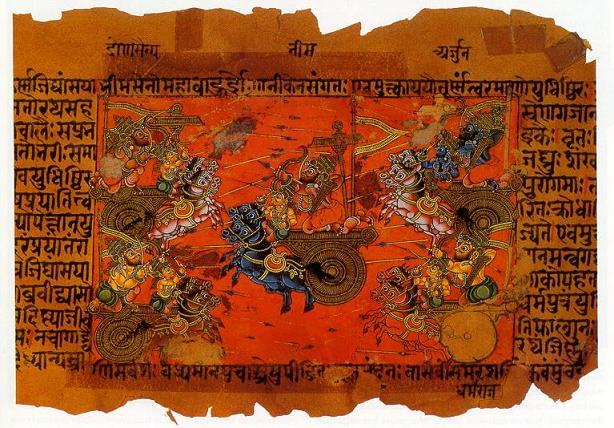
But he’s not done. Following a prophecy delivered to him by the ghost of Theban Teiresias in the underworld (depicted above), Odysseus makes a humbling journey inland. He carries an oar — a symbol of the maritime world where he reined — farther and farther from the sea, until he arrives at a place where it’s mistaken for a farming implement by locals who have “never heard of crimson-painted ships, or the well-shaped oars that serve as wings.”

It is here, stripped of any of the recognitions on which he’d built his previous life, that he plants the oar in the ground and performs sacrifices to Poseidon, before returning home to live out his life in peace.

Read more

When Technology Goes Awry

Last month, I published a peer-reviewed essay in the Communications of the ACM, one of the major trade journals in computer science. It’s titled, “When Technology Goes Awry.” At the time of its publication, in mid-April, there were a few other things going on in the world that were distracting me, so I didn’t mention it then. I want to circle back now and briefly highlight the piece’s big ideas, as they’re relevant to many of our discussions here.

This article provides a more academic foundation to some of the themes I explore in Digital Minimalism. In it, I point out that during the 20th century the formal study of the philosophy of technology split into two roughly competing camps: technological determinism and technological instrumentalism.

As I elaborate:

Read more

Another Tale of Finding Depth in a Locked Down Life

In my last post, I profiled a novelist who took advantage of the lockdown to slow down; giving herself more than enough time and space to inhabit her manuscript revisions. This shift allowed her to tap a “mysterious” source of creativity and finish her work ahead of schedule.

In response, a reader sent me some notes on how he had similarly leveraged the disruption induced by the lockdown to experiment with a deeper, more deliberate lifestyle, despite the fact that he has a typical email-bound knowledge work job and two young kids at home.

Here’s his schedule:

Read more

On Doing Less to Produce More: A Novelist Embraces a Minimalist Lockdown

I recently received an email from a writer in New York City who sold her debut novel right before the coronavirus lockdown. She had until mid-April to finish her first round of revisions. In an effort to make the process more “fun and fluid and intuitive,” and feature less of the stressful long hours she had experienced working on the first draft, she deployed the following routine:

Around 10pm, I put my phone on a shelf in my living room.

After waking up naturally the next morning, I would eat breakfast and then go to my desk and work on my revision.

At first, it was for around 1 hour. Later, I worked until lunchtime. I always stopped while I still wanted to keep going, so that I would be excited to return to it again the next day.

I only looked at my phone and emails after lunch.

I mostly stopped using social media.

I really cared about resting.

She was convinced that this minimalist approach — a process personification of my exhortation to “do less, do better” — would prove inferior to a more familiar, frenetic work style. She began planning out in her head how she would ask for an extension.

Read more

The Chaotic Factory

Imagine that you walk into a car factory and encounter a chaotic scene. Half-built vehicles are scattered across the floor. Workers wander frenetically, grabbing each … Read more

Building a WWII Bunker in an Office Building

A reader recently sent me another entertaining example of the deep life in action.

He runs a design firm with an office in a warehouse-style building that included a cool feature: a “patio,” cantilevered high above the main floor, where he could relax or chat with coworkers.

“While visually very compelling this was a disaster,” he explained. “I basically had thin glass separating [it] from a warehouse where lots of people used, ate lunch, etc…a space with absolutely no functional use.”

Then last summer, on a visit to London, he toured the Churchill War Rooms, a warren of bomb-proof underground bunkers where Winston Churchill and his war cabinet plotted out the Second World War (see above photo). It resonated.

Read more

Bring Back Blogs?

My latest article for WIRED offers a suggestion about improving our information response to the current pandemic.

In the piece I acknowledge that Twitter’s algorithms, in particular, have actually been pretty useful in helping to surface otherwise obscure experts who are suddenly intensely relevant to the moment (I document, for example, how virologist Trevor Bedford jumped from 10,000 to 200,000 followers since February).

But convoluted Tweet threads and thumbnail screenshots of longer articles are a poor way for these experts to explore evolving, complicated ideas.

My solution:

Read more