Study Hacks Blog

The Grade Whisperer: Karen’s Overbearing Parents

The Grade Whisperer is an occasional feature in which I use the Study Hacks philosophy of do less, do better, and know why, to help students overcome their academic problems.

The Parent TrapAdvice
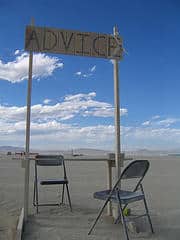
I recently received an e-mail from a student whom I’ll call Karen. She is a sophomore at a top-20 university and is struggling with her parents’ ambitious plans for her college career.

As Karen explained: “Deep down my parents just want to make sure I have a better life than they do.”

But their relentless pressure for Karen to become a doctor (“they argue that doctors have stable jobs”) eventually became too much to handle.

“Second semester of my freshman year I put my foot down,” Karen recalls. “After a tearful and hurtful argument they finally relented and said I should try economics instead.”

But this compromise hasn’t gone well.

“I’m struggling…because I’m simply not interested in my economics courses,” Karen told me.  “My history of human rights course, however, is absolutely fascinating and actually made me seriously consider going to law school and maybe getting an MPA in Public Affairs, or even going to business school.”

Karen reduced her woes to three questions:

  1. “Should I stay at my school? And if so, should I change my major?
  2. “Should I transfer?”
  3. “Should I take a gap semester or year off?”

“I’m just sick of trying to be someone I’m not, but I have this deep-seated fear of being a starving person on the street if I follow my passions.”

Sounds like a job for the Grade Whisperer…

Read more

Are You a Guitar Player or Club Owner?

A Bluegrass SlogBluegrass

I recently began taking bluegrass guitar lessons.

It hasn’t been easy.

The style is precise, which means that it requires an abundance of repetitious practicing.  A typical session might proceed as follows:

  1. Listen to the same 10 – 30 second stretch of a song again and again, deconstructing the lead painfully, note by note, using your ear and a lot of trial and error.
  2. Play this section of the lead again and again for another 30 minutes to an hour — rarely getting through more than a few phrases without a mistake that forces you to start over.

Repeat this enough times, with an increasingly complicated progression of songs, and a weekly check-in with a teacher to correct subtle mistakes in your technique, and you’ll eventually be able to make your way through some basic bluegrass tunes without embarrassing yourself. In other words, the path to becoming even a passable amateur is long and demanding.

I’m sharing these observations because I think they provide an interesting metaphor for the task of building a remarkable life...

Read more

Heidegger with Hefeweizen: Rethinking the Power of Context

Boring on HorsebackA Quiet Pint

A few weeks back, on the recommendation of Ben Casnocha, I started working my way through David McCullough’s biography of a young Theodore Roosevelt: Mornings on Horseback. I was interested in the subject, but the early chapters of the book, which detail the late-19th century New York social scene, were not grabbing my attention.

Not willing to give up the endeavor, I made some changes. First, I prepared a plate of a pleasantly sharp Australian Cheddar that I had discovered on an absurd sale at our local Whole Foods. I then poured a glass of an Italian Abruzzo (a purchase inspired by my early-September visit to a vineyard in the hills outside of Bologna), and settled onto my couch — the splash of incandescent light from my reading lamp the only illumination in the room.

In this setting, my mind eased free of its previous resistance and began to absorb McCullough’s slice of life details. I found myself engaging the material in a way that just a few minutes earlier had been impossible. Something about the tang of the cheese, and the dry sweetness of the wine, supported by a creeping, yet controlled buzz, opened my mind.

This experience provoked an interesting thought: the context in which you do academic work is extremely important, yet most of us give it little consideration…

Read more

Are Passions Serendipitously Discovered or Painstakingly Constructed?

Note (11/24/09): I’m leaving this afternoon for a Thanksgiving road trip. I’ll be slow to moderate comments and answer e-mail for the next week. I’m up to Nov. 10 in my reader e-mail queue. If you sent me an e-mail after that date, you haven’t been forgotten, and I’ll get to you as soon as I can.

Problems with PassionQuiet Study

My friend Scott Young recently published a blog post with an intriguing title: “What if you have more than one passion?” He reports that several readers admitted that they have “a hard time focusing” because they have “too many passions.”

My readers report their own problems with passion. Here are some excerpts from recent e-mails:

  • “I’m currently feeling great antipathy for physics…I’ve found myself questioning my passion for the subject. “
  • “My only true passion is biology, but it’s a damn big field in which I have no focus other than my general spiritual love for green things.”
  • “Yes, this particular major isn’t my passion. However, my studies are funded by my disciplinarian father…”

My point here is that “passion” seems to be a common source of problems. For some, they have too many passions and don’t know where to focus their energies. For others, it’s the lack of a passion, or maybe a belief that their particular passion won’t bring them somewhere worth going.

In this short post, I want to share a new way of looking at this troublesome concept…

Read more

A Study Hacks Primer

Fixed-Schedule Redux My friend Ramit, from the exceptional I Will Teach You To Be Rich blog, just published a guest post I wrote about fixed-schedule … Read more

How to Study for Non-Technical Science Courses

A Sinful OmissionPaper Writing

The red book splits academic subjects into two groups: technical and non-technical. The former covers any course with problems to be solved. The latter describes subjects that have you express your knowledge with essay questions and papers.

This taxonomy, however, has a gaping hole: non-technical science courses. These include biology, psychology, or any other subject that requires you to learn lots of technical information, but tests you predominantly with multiple-choice and short-answer questions.

I thought it was time to put together a short, canonical guide to tackling this type of material…

Read more

The Grade Whisperer: How Jay Became a Living Incarnation of the Study Hacks Canon

The Grade Whisperer is an occasional feature in which I use the Study Hacks philosophy of do less, do better, and know why, to help students overcome their academic problems.

The 25 Year-Old FreshmanAdvice

When Jay graduated high school in 2002, he bypassed college to compete with a professional drum and bugle corps, eventually becoming head of percussion and winning a regional championship.

Over time, Jay sagely realized that “this was not heading toward a long-term career.” So in the fall of 2008, he enrolled in college as a 25 year-old freshman.

Like many new students, he allowed his study habits to coalesce randomly into a half-assed jumble of procrastination and stress.

“My strategy was to earn a 4.0 through losing lots of sleep cramming for exams and saving papers until the last minute,” Jay recalls.

He was earning good grades this first year, but as he reports: “it was killing me both physically and mentally.” Around this time, his daughter was born, straining an already tight schedule.

“It was a disaster waiting to happen.”

His words proved prophetic. This fall, during his first semester as a sophomore, Jay “hit the wall” with a pair of tough upper-level classes.

“Not knowing how to study or manage my time put me behind,” Jay says. He bombed his first exams, earning a D on one of them.

“I realized that I needed to re-learn how to study,” Jay says. This led him to Barnes & Noble, where he stumbled across an intriguing, yellow-colored book. This, in turn, led him to Study Hacks.

Things began to change…

Read more